Direct Carbon Fuel Cell Wettability Study.
Evaluated molten electrolyte spreading on carbon substrates using high-temperature furnace testing, contact-angle analysis, and Python video processing for Direct Carbon Fuel Cell development.
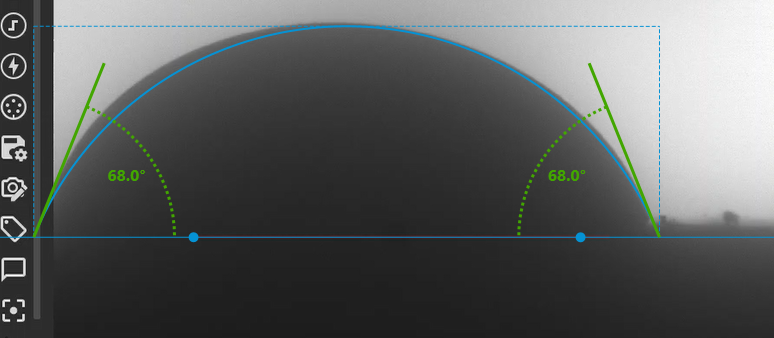
Tested electrolyte–carbon interface behavior to support material selection for high-temperature Direct Carbon Fuel Cells.
At CanmetENERGY-Ottawa, I contributed to Direct Carbon Fuel Cell research focused on carbon–electrolyte interface behavior. The broader project explored how solid carbon from methane thermal cracking could be converted into useful electrical output in a DCFC, while hydrogen generated from the same process could support parallel clean-energy pathways.
My work focused on wettability testing: evaluating how carbonate-based molten electrolytes spread across carbon substrates at high temperature. Using a specialized high-temperature tensiometer/furnace system, I prepared compressed electrolyte pellets, heated them until molten, recorded droplet behavior over multi-hour test cycles, and analyzed contact-angle changes over time.
I also processed long experimental videos using Python scripts for speed-up, cropping, and key-frame extraction. The resulting images supported frame-by-frame contact-angle measurement and helped compare electrolyte candidates under both ambient and CO₂-rich environments.
Public technical summary only. Exact electrolyte formulations, internal datasets, and proprietary validation details are excluded.
- 01Prepared compressed electrolyte pellets and carbon substrates for high-temperature wettability experiments simulating Direct Carbon Fuel Cell interface conditions.
- 02Ran furnace/tensiometer trials at molten-electrolyte conditions, recording droplet spreading behavior under ambient and CO₂-rich environments.
- 03Built Python video-processing workflows to crop, speed up, and extract key frames for contact-angle measurement and electrolyte candidate comparison.