3D-Printed Cellulose Aerogels for Carbon Capture & Energy Storage.
Developed porous cellulose-based hydrogel and aerogel structures using nanomaterial additives, 3D printing, and freeze-drying for carbon capture and energy-storage applications.
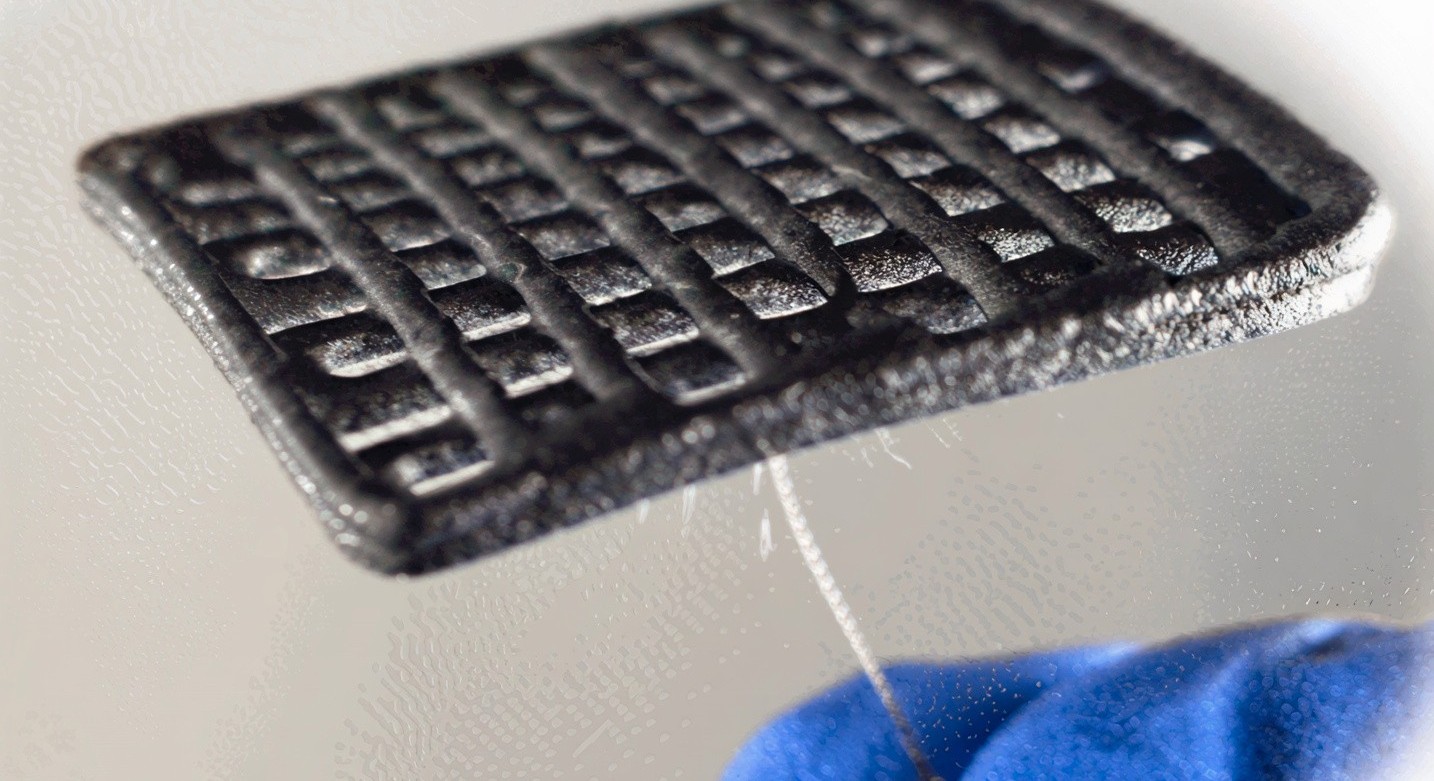
Built a self-directed nanomaterials workflow connecting formulation, 3D printing, porosity engineering, and early electrochemical testing.
At Kamkar Labs, I initiated an independent materials research project focused on biodegradable porous media for carbon capture and electrochemical energy storage. The goal was to explore whether cellulose-based hydrogel formulations could be converted into lightweight aerogel structures with tunable porosity, conductivity, and surface area.
I prepared composite formulations using cellulose as the base matrix and incorporated conductive or functional additives such as graphene, carbon nanotubes, and polyaniline. The formulations were mixed into printable hydrogel inks, extruded into custom scaffold geometries using a Complex-3 hydrogel 3D printer, then freeze-dried to preserve internal pore structure.
The project connected materials chemistry, additive manufacturing, and early device testing. I evaluated the aerogels for qualitative CO₂ uptake behavior and worked with lab researchers to explore preliminary supercapacitor integration through cyclic voltammetry testing.
- 01Formulated cellulose-based hydrogel inks with graphene, carbon nanotubes, and polyaniline to tune conductivity, porosity, and structural behavior.
- 02Fabricated custom scaffold geometries using hydrogel 3D printing, then freeze-dried the printed structures to preserve open-cell aerogel networks.
- 03Explored carbon-capture behavior and preliminary supercapacitor integration through qualitative uptake observations and cyclic voltammetry testing.